
AI’s Growing Role in Singapore
As Singapore’s built environment grows more complex, planners and developers alike are turning to new tools to make sense of it. Artificial intelligence, once a distant concept, is now embedded in how the city plans, builds and manages itself.
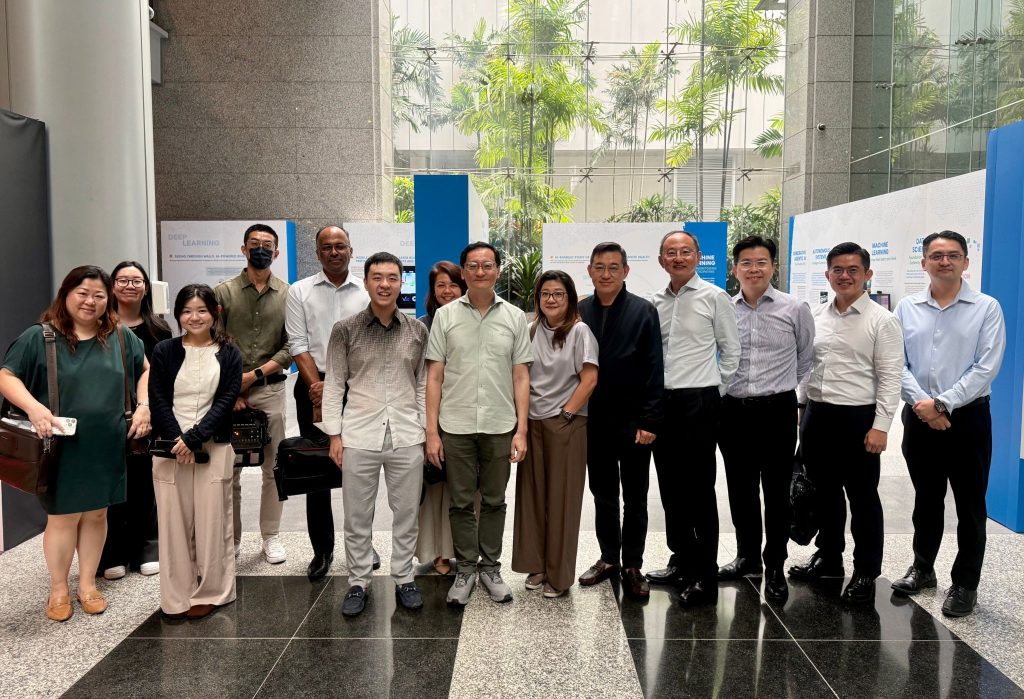
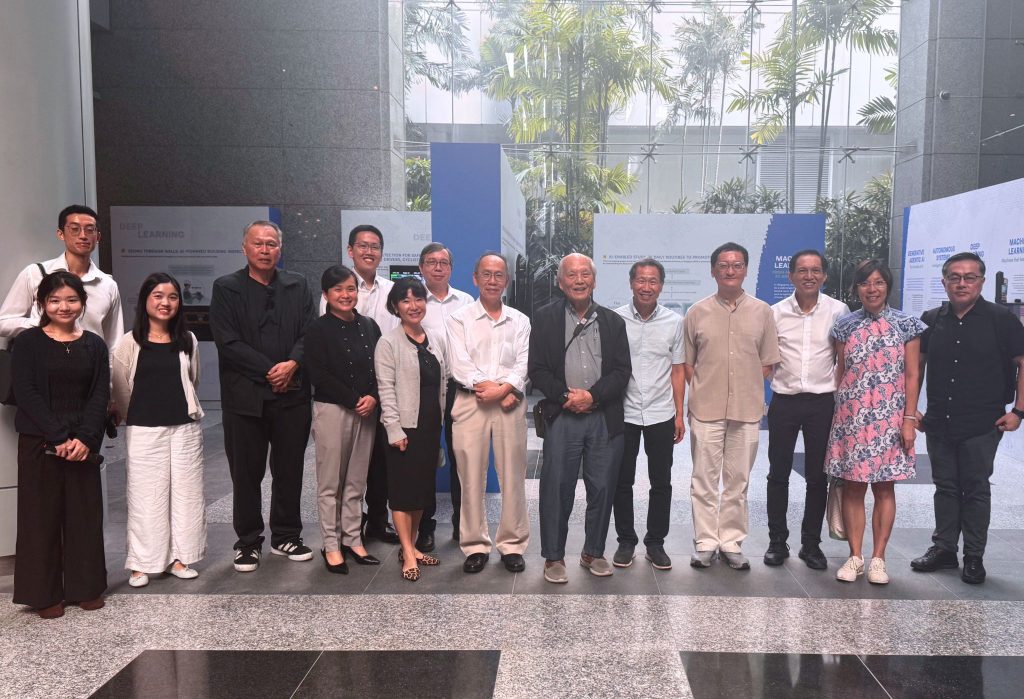
REDAS members visited AI for Cities, an exhibition by URA running at The URA Centre. The exhibition traces how AI has evolved in Singapore’s urban planning, from early data science and modelling to today’s machine learning, deep learning and generative AI applications, featuring projects from agencies and industry partners across transport, building management and urban safety. Here’s a look at four applications that are especially relevant to how developments are planned, built and run.
Planning ahead for electric vehicles
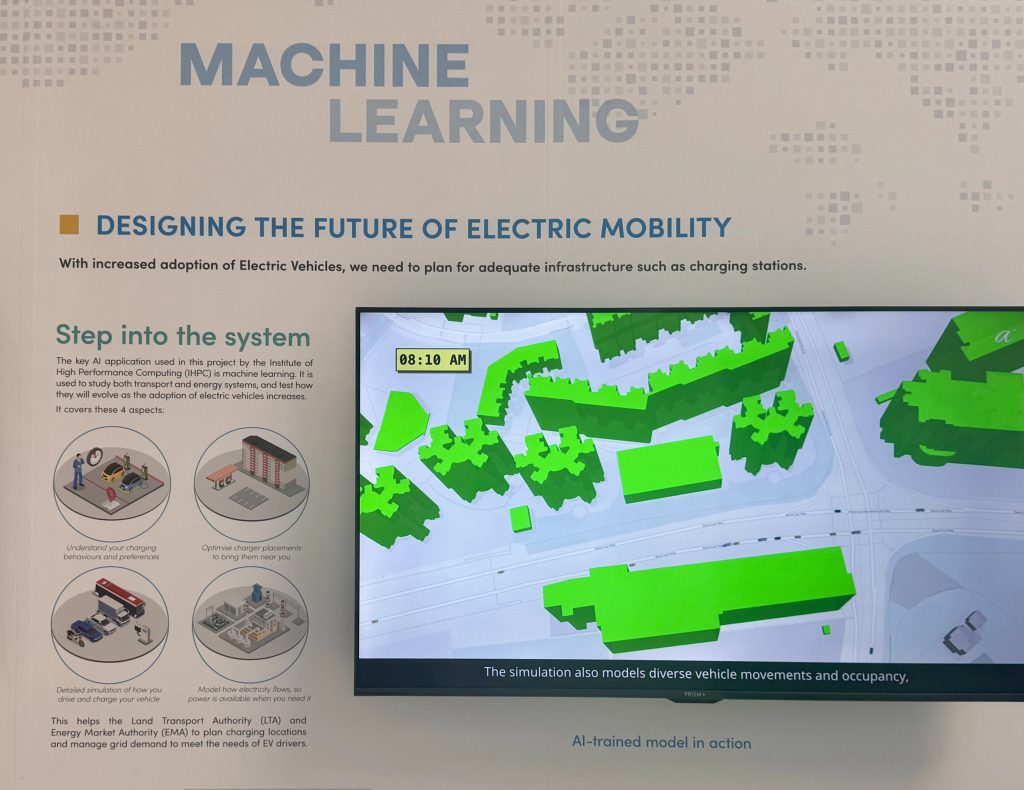
As EV adoption grows, so does the pressure to place charging infrastructure in the right locations. The Institute of Advanced Intelligence and Computing (IAIC) is using machine learning to study how people charge their vehicles and how power demand shifts as adoption rises, helping LTA and EMA plan charger locations and manage grid demand ahead of need.
Buildings that manage themselves
JTC’s Open Digital Platform connects a building’s sensors, cameras and energy systems into a single platform. AI flags issues early, predicts maintenance needs and adjusts energy use automatically. Facility managers can also ask AskODP, a GenAI chatbot, simple questions about building health instead of digging through dashboards.
Seeing through walls
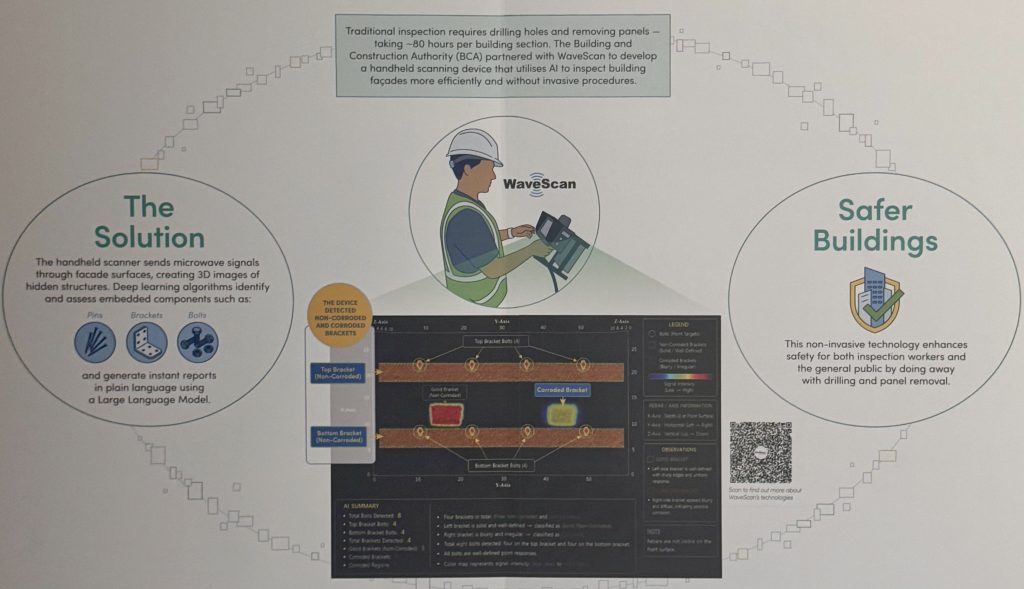
Traditional facade inspection means drilling holes and removing panels, taking around 80 hours per building section. BCA and WaveScan developed a handheld scanner that sends microwave signals through facade surfaces to create 3D images of what’s hidden inside, with deep learning identifying and assessing components like pins, brackets and bolts, flagging corrosion and other defects, and generating plain-language reports on the spot.
Catching unsafe parking
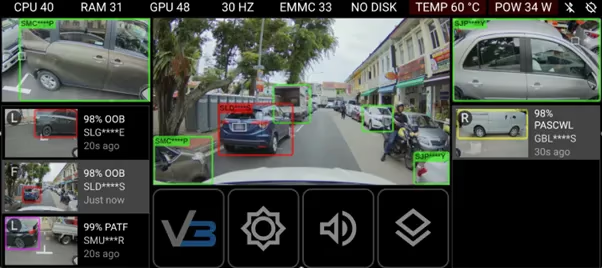
URA and V3 Smart Technologies trained a deep learning model on over 670 hours of driving footage to detect unsafe parking behaviour in real time, achieving over 95% accuracy and helping reduce traffic disruption on the roads.
AI is increasingly being used not to replace planning judgement, but to sharpen it, surfacing patterns and possibilities that would otherwise take far longer to uncover. For developers, several of these applications point to practical questions ahead, from how buildings are managed to how future developments plan for infrastructure and community needs.
AI for Cities runs till 21 August 2026 at The URA Centre (Level 1 Atrium, 45 Maxwell Road), open Mondays to Saturdays, 9am to 5pm. Admission is free.
For more information visit here.
