
On 22 July 2026, Minister for National Development Chee Hong Tat announced preliminary findings from a new BCA study quantifying the business case for Design for Maintainability (DfM).
The Building and Construction Authority (BCA) released preliminary findings from the study, demonstrating the business case for investing in DfM features. By incorporating these features early in the design process, developers, building owners and tenants can expect to benefit from substantial maintenance cost and manpower savings over a building’s life cycle.
What is Design for Maintainability
Design for Maintainability (DfM) means building maintenance considerations into a project’s design from the start, rather than addressing them after handover — through decisions on facade access, material selection, and equipment placement, among others.
DfM is assessed under BCA’s Green Mark 2021 Certification Scheme via the Maintainability (Mt) Section. Projects that perform well may be awarded the Green Mark Maintainability (Mt) Badge, which is already a requirement for GreenGov.SG buildings, the Built Environment Transformation GFA Bonus Incentive Scheme, and applicable Government Land Sales sites. To date, 67 projects have obtained the Mt Badge.
Study Scope
The study examined four Singapore developments — SJ Campus and Ascent (existing commercial buildings), Shaw Tower (a new commercial development), and Copen Grand (a new residential project). DfM features within each building were mapped against BCA’s Green Mark Maintainability (Mt) Section, with life-cycle cost analysis applied to each feature based on its actual service life — from facade access to chiller plant replacement.
Key Findings
For the commercial buildings studied, incorporating DfM features added between 0.6% and 1.5% to construction cost, against potential annual operational savings of $310,000 to $950,000. The majority of measures achieved payback within six years. For Copen Grand, the residential case study, the additional cost was 0.2%, with potential annual savings of up to $110,000 and payback typically within five years.
The study also recorded significant productivity gains: nearly all DfM features assessed reduced annual maintenance man-days, with many achieving reductions of over 60%.
Copen Grand Building Design Facade Access Features
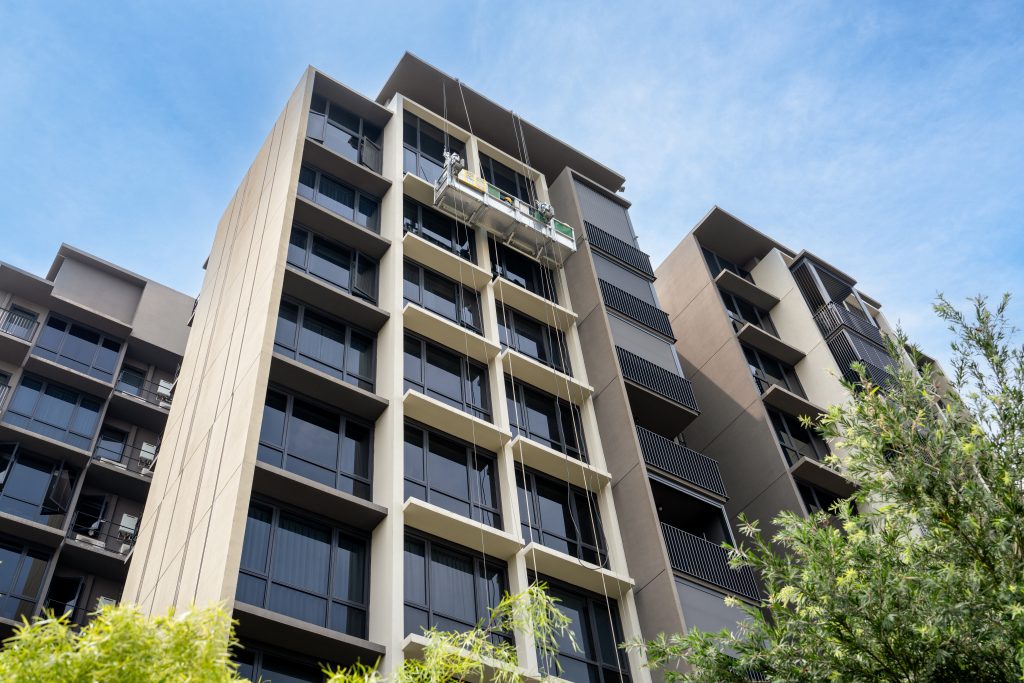
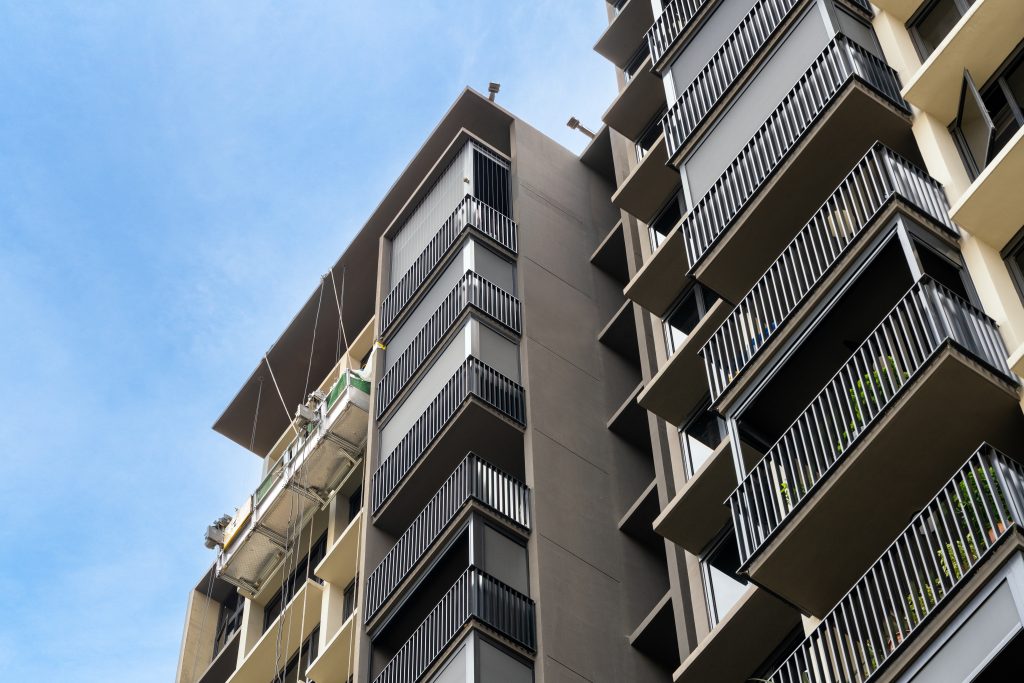
Copen Grand, Singapore’s first Green Mark Platinum Super Low Energy Executive Condominium, incorporates a davit arm system with gondolas at roof level for facade maintenance. The facades of all residential blocks are maintainable via this gondola system.
The provision allows routine facade maintenance to be carried out without erecting temporary access equipment, extending the design intent behind DfM to residential developments as well as commercial buildings.
Cooling Tower Access at Shaw Tower
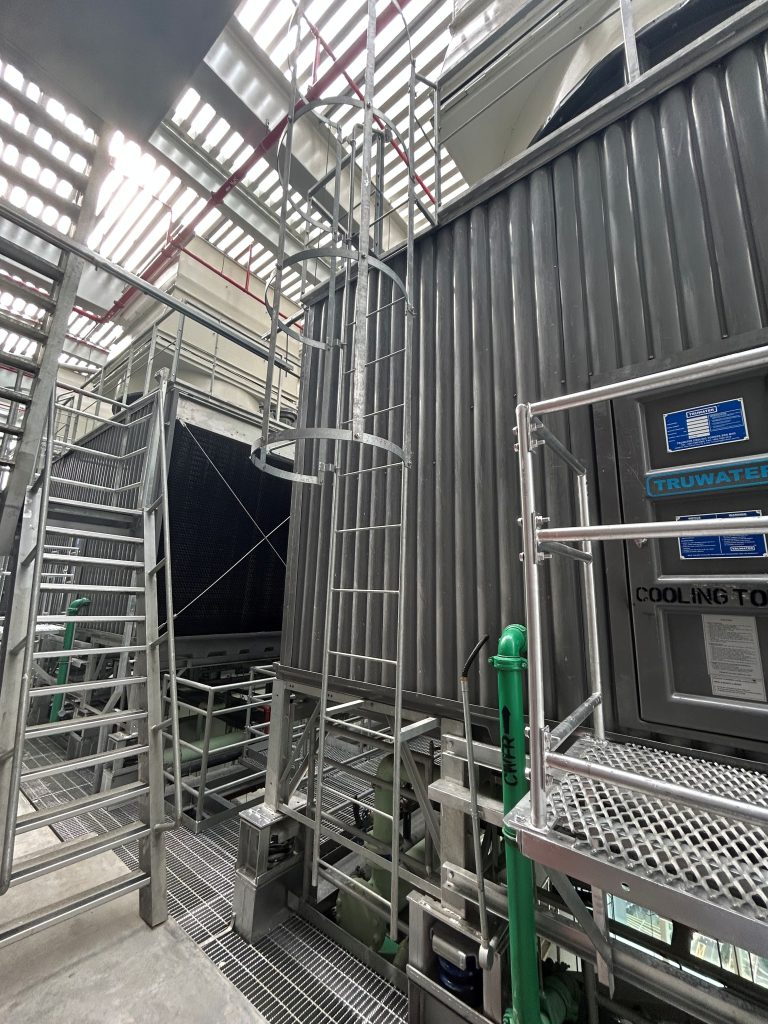
Without dedicated access built into the design, servicing the fan and basin atop a cooling tower typically means putting up temporary scaffolding — a costly, time-consuming exercise each time routine maintenance is due. At Shaw Tower, a cat ladder built into the design gives maintenance teams safer, more direct access instead. This single design decision is projected to generate life-cycle savings of over $750,000, with a payback period of three years. As cooling towers typically have a 15-year service life, recovering the investment within three years means net positive returns for the remaining 12 years.
By designing this enclosed ladder for access above the cooling tower, the design also ensures sufficient space and safe access for workers, and removes budget and space constraint issues that would arise if such access were added at a later stage.
Across the case studies, the largest DfM gains were attributed to design decisions such as access provisions, material specifications, and equipment placement — rather than costly new technology.
BCA is encouraging developers and building owners to attain the Green Mark Mt Badge, to enhance long-term performance, unlock potential lifecycle savings, and add value to their properties. For developers selling units upon completion, the Mt Badge offers buyers added assurance of long-term sustainability and cost-efficient maintenance.
Architects and engineers are similarly encouraged to apply maintainability considerations in their projects, strengthening the value proposition for clients and supporting the sector’s broader transformation.
BCA and SJ Group will hold industry engagement sessions with architects, engineers, developers, and FM practitioners in the coming months to share the study’s findings and gather feedback. The final report is expected to be released later this year.
Find out more about DfM.
